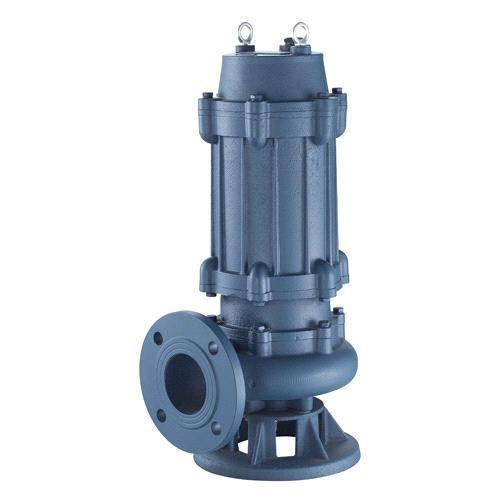
How to Choose the Right Sewage Submersible Pump
Start with Required Flow and Total Dynamic Head
Flow is the volume of wastewater the pump must move over time. Specify it in litres per minute or cubic metres per hour. Include peak inflow and the required pumping cycle when discussing capacity.
Total dynamic head includes the elevation difference, pipe friction and losses through valves and fittings. Any pressure difference between the collection and discharge points must also be included. The vertical lift alone does not describe the full pumping requirement.
For example, an open tank system with a 6 metre static lift and 4 metres of estimated pipe and fitting losses needs about 10 metres of head at the required flow. This is an illustrative calculation. The actual duty must be checked against the selected pump’s performance curve.
Check Solids and Fibrous Waste
Tell the supplier about the largest expected solids and the presence of cloth, fibres, grit or grease. A non clog design helps pass suitable waste, but it does not make every material safe to pump. Solids passage is a model specification and should be confirmed in millimetres.
If cutting or grinding is needed, discuss a pump specifically designed for that duty. Do not assume that every sewage submersible pump includes a cutter.
Match Materials and Electrical Supply
Provide the liquid temperature and any chemical content that could affect the casing, impeller, seals or cable. For industrial effluent, include pH and known chemicals where available. Material choice should follow compatibility with the actual wastewater.
Confirm the site voltage, phase, frequency and available control arrangement. Motor power should follow the selected hydraulic duty and pump curve rather than being the only basis for purchase.