

What Is Centrifugal Pump Cavitation?
Centrifugal pump cavitation is one of the most common reasons pumps fail early in the field. It happens when the pressure inside the pump drops too low, the liquid turns into small vapor bubbles, and those bubbles collapse with great force as they move into higher pressure zones. Each tiny collapse hits the metal like a small hammer strike, thousands of times per second.
Over time, this hammering wears down the impeller, damages the casing, drops the pump’s flow and pressure, and makes the whole machine vibrate. Many operators first notice the sound — a crackling, rattling, or gravel-like noise coming from the pump. By the time the noise is loud, the damage has often already begun.
The good news is that cavitation in centrifugal pumps can be prevented. Once you understand what causes it, the symptoms to watch for, and the simple fixes, you can protect your pump and keep it running for many years. This guide explains all of that in plain English.
How Centrifugal Pump Cavitation Works
To understand cavitation, you need to know two simple ideas:
- Vapor Pressure: Every liquid has a vapor pressure. When the local pressure falls below this number, the liquid starts to boil and turn into vapor — even at room temperature.
- Pressure Recovery: Inside the pump, pressure rises as liquid moves from the suction (eye of the impeller) to the discharge. The vapor bubbles that formed in the low-pressure zone collapse violently when they enter the higher pressure area.
This forming and bursting of bubbles is called cavitation. It is not boiling. It is a pressure-driven event that happens inside the pump, often at the eye of the impeller where pressure is lowest.
Main Causes of Centrifugal Pump Cavitation
There are many reasons a pump can cavitate. Here are the most common causes, in simple words.
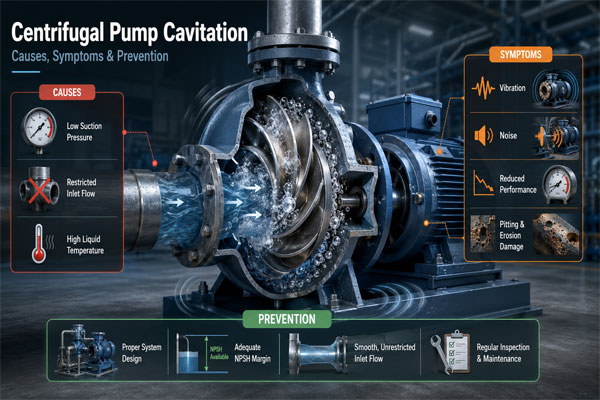
- Low Suction Pressure (Low NPSHa): If the suction side does not have enough pressure, the liquid flashes into vapor. This is the number one cause.
- High Liquid Temperature: Hot liquids have higher vapor pressure. A small drop in suction pressure is enough to cause cavitation.
- Suction Pipe Too Small or Too Long: Small pipes create high friction losses. Long pipes add to that loss. Both reduce the pressure at the pump suction.
- Clogged Strainer or Foot Valve: A blocked strainer or foot valve chokes the flow, lowers suction pressure, and triggers cavitation.
- Pump Running Too Far From BEP: Every pump has a Best Efficiency Point (BEP). Running far to the left (low flow) or far to the right (high flow) raises cavitation risk.
- Excessive Suction Lift: If the liquid level in the tank is far below the pump, the pump has to “pull” the liquid up too far.
Air Leaks in the Suction Line: Even a small air leak at a flange or joint can disturb flow and cause local pressure drops.
Common Symptoms of Pump Cavitation
Spotting cavitation early saves you a lot of money. Watch for these signs:
- Loud Crackling or Rattling Noise: A sound like gravel inside the pump. This is the most common first sign.
- Vibration: The pump starts to shake more than usual, especially on the bearing housing.
- Loss of Flow and Pressure: The pump cannot deliver the rated flow or head anymore.
- Metal Pitting on the Impeller: Small rough holes or pits appear on the impeller vanes.
- Higher Power Use: The motor draws more current to try to maintain performance.
- Overheating of Bearings and Seals: Vibration and imbalance cause extra heat.
- Loss of Flow and Pressure: The pump cannot deliver the rated flow or head anymore. If you calculate pump head during operation, you will notice a significant drop compared to its rated performance.
Key Takeaway: If you hear a cracking sound and see vibration together, assume cavitation. Shut down the pump and check the suction side before continuing.
How to Prevent Centrifugal Pump Cavitation
Keep NPSHa Higher Than NPSHr: NPSHa is the pressure you have on the suction side. NPSHr is what the pump needs. Always have at least 1–2 meters of extra NPSH margin.
Lower the Liquid Temperature: Cooler liquid has lower vapor pressure. Use a cooler source or reduce line exposure to heat.
Use a Larger Suction Pipe: A larger pipe reduces friction loss and raises the pressure at the pump suction.
Shorten the Suction Pipe: Less pipe length means less friction loss.
Clean the Strainer and Foot Valve: A clean strainer keeps the flow smooth and the pressure stable.
Reduce Suction Lift: Place the pump as close to the liquid source as possible, or use a flooded suction.
Operate Near the BEP: Run the pump near its Best Efficiency Point. Avoid very low or very high flow.
Check for Air Leaks: Do a soap-bubble test on suction flanges. Fix any leaks you find.
Centrifugal Pump Cavitation vs Other Pump Problems
While cavitation has distinct signs like a rattling noise and high vibration, it is important to distinguish it from a general low discharge pressure issue or other mechanical faults.
| Problem | Sound | Vibration | Pressure Drop | Damage Location |
|---|---|---|---|---|
| Cavitation | Crackling, rattling | High | Yes | Impeller eye, vanes |
| Air in the Line | Whistling, hissing | Medium | Yes | No damage at first |
| Bearing Failure | Grinding, rumbling | Very high | No | Bearings, shaft |
| Misalignment | Thumping | High | No | Coupling, bearings |
Problems Caused by Cavitation in Industrial Plants
Problem: The pump loses flow and the process slows down.
Solution: Fix the NPSH margin and restore the rated flow.
Problem: The impeller gets pitted and must be replaced often.
Solution: Use a harder impeller material and reduce cavitation at the source.
Problem: Energy bills rise because the motor works harder to push less liquid.
Solution: Restore proper suction conditions and the pump returns to its BEP.
Problem: The intense vibration from cavitation leads to the premature failure of mechanical seals and bearings.
Solution: Fix the root cause of cavitation to eliminate excess vibration and extend the lifespan of your pump’s sealing components.
Real-World Example: Cooling Water Pump
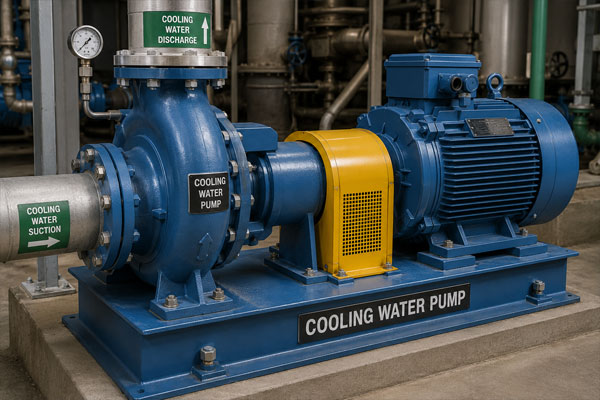
Imagine one of your centrifugal process pumps moving cooling water in a plant. The tank is 3 meters above the pump. The strainer has not been cleaned in 6 months. The pump starts making a cracking sound. The operator also sees a 10% drop in flow. This is a classic case of centrifugal pump cavitation caused by a clogged strainer. Cleaning the strainer restores full flow and silences the pump.
How Rinku Engineers Can Help
At Rinku Engineers, we help plants fix cavitation problems at the root. Our team checks the NPSH margin, reviews the suction piping, inspects the impeller, and recommends the right pump size—such as upgrading to a polypropylene chemical pump to better handle corrosive-cavitation duties. We work with chemical, water, oil and gas, and power plants across India. To resolve your pumping issues, contact our pump engineering team.
Conclusion
Centrifugal pump cavitation is a common but preventable problem. The key is to keep NPSHa higher than NPSHr, keep the suction clean and short, and run the pump near its Best Efficiency Point. If you hear cracking noises, see vibration, or notice a flow drop, check the suction side first. Catching cavitation early saves the impeller, the motor, and your production schedule. For more tips and guides on industrial pump troubleshooting, explore our other resources.
Frequently Asked Questions (FAQs)
Centrifugal pump cavitation is the forming and bursting of vapor bubbles inside the pump. It happens when the local pressure at the pump suction drops below the vapor pressure of the liquid.
The main causes are low suction pressure, high liquid temperature, a suction pipe that is too small or too long, a clogged strainer, and a pump running far from its best efficiency point.
Common symptoms are a loud cracking or rattling sound, vibration, loss of flow and pressure, metal pitting on the impeller, and higher power use.
You can prevent cavitation by keeping NPSHa higher than NPSHr, lowering liquid temperature, enlarging the suction pipe, cleaning the strainer, and matching the pump to the system.
Yes. Cavitation eats away the impeller and casing, causes vibration, drops performance, and can lead to early pump failure if not fixed.
Cavitation is vapor bubbles that form and collapse inside the pump. Air binding is when air gets trapped in the pump and stops the flow. Both reduce flow but the sound and the fix are different.
If the damage is light (small pits), the pump can keep running. Heavy damage means the impeller must be replaced. Either way, fix the root cause first or the new impeller will also fail.