


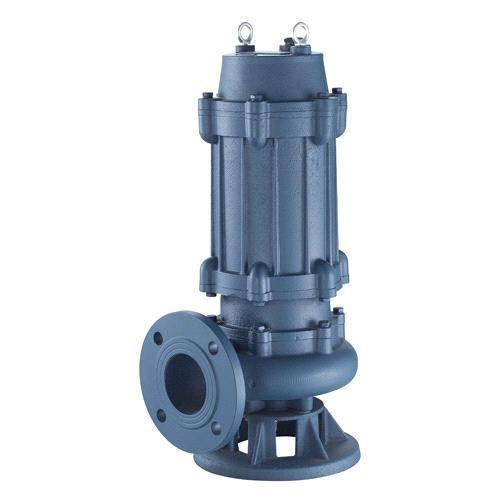
An apparatus that transports both liquid and solid sewage is called a Sewage Pump. Sewage, which may contain soft particles up to two inches in diameter, is often forced from a sewage basin to a septic tank or sewage system in residential settings. At the bottom of the sewage basin is a Sewage Submersible Pump.
Applications :
- Residential Properties: Sewage pumps commonly used in homes to transport wastewater from basements, laundry rooms, and bathrooms to the main sewer line or septic tank.
- Commercial Buildings: In commercial settings such as restaurants, hotels, and offices, sewage pumps help manage wastewater generated by various activities, ensuring proper sanitation and preventing backflow and flooding.
- Industrial Facilities: Sewage pumps play a vital role in managing wastewater in industrial settings, including factories and processing plants, where large volumes of wastewater are generated.
- Municipal Applications: Sewage pumps are also employed in municipal wastewater treatment plants, helping to transport and process sewage from various sources.
Sewage Pumps FAQs
1. What is a sewage pump?
A sewage pump is a pump specifically designed to move sewage, wastewater, and water containing solids from one location to another. Unlike regular water pumps, sewage pumps have wider passages and robust impellers that can handle solids like sewage, debris, and small objects without clogging. They are commonly used in municipal sewage systems, building drainage, and industrial wastewater applications.
2. What is the difference between a sewage pump and a sump pump?
Sewage pumps handle solids up to 2 inches (50mm) or more and are used for sewage and wastewater with solid waste.
Sump pumps handle clear water or water with very small particles, typically used for basements and drainage.
For sewage applications, always use a sewage pump – sump pumps will clog quickly with solid waste.
3. What are the different types of sewage pumps?
Main types include:
- Submersible sewage pumps – installed underwater, sealed motor
- Dry-pit sewage pumps – installed in dry chamber next to wet well
- Non-clog sewage pumps – specialized impeller design that prevents clogging
- Grinder pumps – cut solids into smaller pieces before pumping
- Effluent pumps – for treated wastewater with smaller solids
- Dewatering pumps – for construction sites and temporary applications
4. What solids can sewage pumps handle?
Standard sewage pumps handle solids up to 50mm (2 inches). Heavy-duty models handle solids up to 100mm or more. Grinder pumps can cut solids into smaller pieces (10-25mm). The solid-handling capability depends on the impeller design and pump passage size.
5. How do I choose the right sewage pump?
Consider these factors:
- Flow rate needed (m³/hr or LPM)
- Total head (vertical lift + friction losses)
- Solid size in the sewage
- Installation depth (for submersible models)
- Power supply (single phase vs three phase)
- Continuous vs intermittent duty
- Auto or manual operation
Rinku Engineers in Ahmedabad provides technical consultation for proper sizing.
6. What is the typical price of a sewage pump in India?
Sewage pump prices in India range from ₹10,000 for small 1 HP models to ₹10,00,000+ for large industrial/municipal pumps. Pricing depends on:
- Horsepower and capacity
- Material (CI vs SS construction)
- Submersible vs dry-pit design
- Brand and certification
- Special features (grinder, auto-control)
As an Ahmedabad-based manufacturer, Rinku Engineers offers competitive factory pricing.
7. What materials are sewage pumps made from?
Most sewage pumps feature:
- Cast Iron body and impeller (common, durable)
- Stainless Steel (SS 304, SS 316) for corrosive wastewater
- Bronze impellers for certain applications
- Hardened steel cutting elements for grinder pumps
Material selection depends on the wastewater composition and environmental conditions.
8. How deep can submersible sewage pumps be installed?
Standard submersible sewage pumps work at depths up to 10-20 meters. Special deep-well models can operate at 30+ meters. The depth limit depends on:
- Cable length and type
- Motor cooling capability
- Hydraulic performance at depth
- Pressure rating of seals
9. Do sewage pumps have automatic operation?
Yes, most modern sewage pumps come with automatic control options:
- Float switches for level-based on/off operation
- Electrode sensors for solid-state level control
- Pressure sensors for accurate level measurement
- Control panels for multi-pump systems
- Variable speed drives for demand-based operation
Auto-operation is standard for most residential and commercial sewage pump applications.
10. What is a grinder pump and when is it used?
A grinder pump cuts sewage solids into small slurry before pumping. It’s used when:
- Small discharge pipes (50-80mm) are required
- Pressure sewer systems are used
- Solids are too large for standard sewage pumps
- Pumping distance is long
Grinder pumps cost more but allow use of smaller piping and are common in pressure sewer systems.
11. Can sewage pumps run continuously?
Yes, heavy-duty sewage pumps are designed for continuous operation. However, residential and light commercial models are typically rated for intermittent duty. Check the manufacturer’s specifications:
- S1 duty – continuous operation
- S2 duty – short-term operation
- S3 duty – intermittent operation
Match the duty rating to your application requirements.
12. What maintenance do sewage pumps require?
Regular maintenance includes:
- Inspecting impeller for wear and clogging
- Checking oil chamber and seals
- Testing electrical connections and insulation
- Verifying float switch operation
- Cleaning suction screen
- Checking bearings and mechanical seals
- Megger testing the motor windings
Most submersible sewage pumps can be lifted out for servicing without entering the wet well.
13. What is the typical lifespan of a sewage pump?
With proper maintenance, quality sewage pumps last 8-15 years. Heavy-duty municipal pumps can last 15-25 years. Lifespan depends on:
- Operating hours per year
- Fluid characteristics (corrosive sewage reduces life)
- Maintenance quality
- Number of starts/stops
- Installation quality
14. Are sewage pumps energy efficient?
Modern sewage pumps with IE3/IE4 high-efficiency motors offer good energy performance. Variable speed drives can significantly reduce energy use by matching pump output to actual demand. For large municipal applications, energy efficiency can result in substantial cost savings over the pump’s lifetime.
15. What is the difference between single-phase and three-phase sewage pumps?
Single-phase pumps (220V):
- Available in smaller capacities (up to 3 HP typically)
- Suitable for residential and small commercial use
- Easier installation, no three-phase power required
Three-phase pumps (380-415V):
- Available in all capacities (1 HP to 500+ HP)
- More efficient and reliable
- Required for large commercial, industrial, and municipal applications
Choose based on your power supply and capacity needs.
16. What is a non-clog impeller?
A non-clog impeller has wide passages and usually 2-3 vanes instead of the typical 5-7 vanes found in standard impellers. This design:
- Allows larger solids to pass through
- Reduces clogging and downtime
- Maintains reasonable efficiency
- Handles sewage, debris, and small objects
Non-clog impellers are standard in quality sewage pumps.
17. What certifications should a quality sewage pump have?
Look for these certifications:
- ISI mark for Indian standards compliance
- ISO 9001 for manufacturing quality
- CE marking for European markets
- IP68 rating for submersible motors (waterproof)
- ATEX for explosive atmosphere applications
- BIS certification for India
Rinku Engineers’ pumps comply with relevant Indian and international standards.
18. Can sewage pumps handle corrosive wastewater?
Standard cast iron pumps handle most municipal sewage. For corrosive applications (industrial wastewater, chemical effluent), use:
- SS 316 construction for mildly corrosive fluids
- Special coatings or linings for aggressive chemicals
- Duplex stainless steel for highly corrosive applications
Specify your fluid characteristics when ordering.
19. What is the delivery time for sewage pumps in India?
Standard submersible sewage pumps (1-10 HP) are typically delivered in 1-3 weeks from Indian manufacturers. Large custom-engineered pumps or specialized models may take 4-8 weeks. Rinku Engineers in Ahmedabad maintains inventory of common models for quick dispatch.
20. Do sewage pumps require a control panel?
Most sewage pumps need a control panel for:
- Motor protection (overload, dry run, phase failure)
- Automatic operation (with float switches or sensors)
- Alternating duty in dual-pump systems
- Alarm notifications
Control panels are typically sold separately and configured to your specific installation requirements.
21. Why is dry-run protection important?
Dry-run protection prevents pump operation when there’s no fluid. Running dry damages seals, bearings, and motors. Protection methods include:
- Float switches that disable pump at low levels
- Thermal sensors that detect overheating
- Conductivity probes that sense fluid presence
- Current monitors that detect dry-run conditions
Dry-run protection significantly extends pump life.
22. Are submersible sewage pumps noisy?
Submersible sewage pumps are very quiet because they operate underwater. Noise is limited to:
- Slight motor hum (transmitted through water)
- Water turbulence sounds
- Pipe vibrations
For noise-sensitive applications, dry-pit installations may require sound insulation.
23. What are common causes of sewage pump failure?
Most sewage pump failures are caused by:
- Clogging from oversized solids
- Seal failure leading to water ingress
- Cable damage from abrasion or chemical attack
- Motor burnout from voltage issues or dry running
- Impeller wear from abrasive materials
- Bearing failure from inadequate lubrication
Proper selection, installation, and maintenance prevent most failures.
24. Can sewage pumps be installed outdoors?
Yes, submersible sewage pumps are designed for outdoor installation in wet wells, manholes, and sewage chambers. The pump and motor are sealed (IP68 rating) against water ingress. However, the control panel and electrical connections should be protected from weather in a suitable enclosure.
25. How are sewage pumps installed?
Typical installation steps:
- Prepare wet well or sump chamber
- Install guide rails for easy pump removal
- Mount discharge piping with check valve
- Lower pump into position using guide rails
- Connect electrical cables and control panel
- Test operation and set float switches
- Test alarm systems
Rinku Engineers provides installation guidance and on-site support services.
26. Do I need a check valve on the discharge pipe?
Yes, a check valve is essential on the sewage pump discharge pipe. It prevents:
- Backflow when pump stops
- Water hammer damage
- Sewage returning to the wet well
Swing check valves or ball check valves are commonly used. Install at or near the pump discharge.
27. What is the difference between sewage pumps and effluent pumps?
Sewage pumps handle raw sewage with solids up to 50mm or more.
Effluent pumps handle treated wastewater or septic tank effluent with smaller particles (typically up to 20mm).
Effluent pumps are used after partial treatment; sewage pumps handle raw waste.
28. Why choose Rinku Engineers as your sewage pump supplier?
Rinku Engineers in Ahmedabad offers:
- Wide range of standard and custom sewage pumps
- Competitive factory pricing
- Quality materials and construction
- Technical support and sizing assistance
- Installation guidance
- After-sales service and spare parts
- Export experience to multiple countries
- Responsive customer service