

Optimizing Industrial Wastewater, Slurry, and Effluent Handling
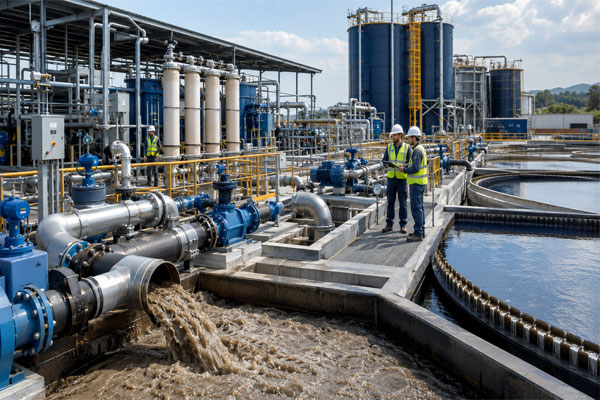
Your effluent treatment plant (ETP) operates 24/7, treating hundreds of thousands of liters of industrial wastewater daily. But three times this month alone, your circulation pump has clogged and stopped flowing. Production has backed up; wastewater is accumulating in holding tanks. The EPA compliance officer is asking uncomfortable questions.
This is the story of every facility manager running an undersized, incorrectly specified pump for slurry and sewage service.
At Rinku Engineers in Ahmedabad, we’ve engineered reliable slurry handling solutions for ETPs, chemical treatment plants, textile dying facilities, and heavy manufacturing plants across Gujarat for over a decade. The difference between a clogging nightmare and smooth operation comes down to one thing: pump selection.
In this guide, we’ll show you exactly why clogging happens, how to size the right pump for your application, and how Rinku’s AYUSH Sewage Submersible Pump (ASSP Series), Side Suction Filter Press Pump, and AYUSH Slurry Handling Pump (AHPMT/ST Series) eliminate the recurring downtime that’s costing you thousands daily.
The Challenge: Why Standard Pumps Fail in Slurry Service
To understand slurry pump failures, you first need to understand what “slurry” really means.
What Is Slurry? The Properties That Cause Failure
Slurry is a mixture of solids suspended in liquid. But not all slurries are the same:
- Low-concentration slurry: < 10% solids by weight. Example: ETP discharge, treated wastewater
- High-concentration slurry: 10–50% solids by weight. Example: industrial wastewater before treatment, mining tailings
- Abrasive slurry: Contains hard particles (sand, minerals, metal fines). Example: Grinding coolant discharge, blast cleaning wastewater
- Fibrous slurry: Contains rags, fibers, hair. Example: Textile plant wastewater, paper mill discharge
- Settling slurry: Solids gradually sink and compact. Example: Ink residue, pigment dispersion
Each type demands different pump design.
Failure Mode 1: Clogging at the Impeller Eye
Symptom: Pump runs but flow gradually drops to zero over 2–4 hours. Discharge pressure climbs but no liquid comes out.
Root cause: Standard centrifugal pumps have a narrow impeller eye (the inlet hole where fluid enters the impeller). When slurry with fibrous material or large particles enters, fibers wrap around the impeller shaft and jam the eye. The pump spins but can’t move fluid.
Example: A textile dying facility uses a standard centrifugal pump to drain wastewater. Fabric fibers, lint, and cotton threads in the discharge line wrap around the impeller. Within 2 hours, the pump clogs completely. Production stops until maintenance manually cleans the impeller (2-hour job, emergency labor).
Cost per clogging incident: ₹15K–30K (labor + lost production) Frequency: 3–5 times per week in heavy textile operation Annual loss from clogging: ₹25–50 lakhs
Failure Mode 2: Abrasive Wear on Impeller & Casing
Symptom: Pump flow gradually decreases over weeks; wear rate accelerates. Eventually impeller blade thickness reduces so much that pump efficiency drops 30–50%.
Root cause: Abrasive particles (sand, mineral, metal fines) in slurry act like sandpaper. As the centrifugal pump spins the impeller at 1450–2900 RPM, the high-velocity particles scour the impeller blade surface and casing interior.
Example: An industrial grinding facility discharges 500 L/hour of coolant mixed with fine metal particles. The centrifugal pump impeller, designed with thin blade edges for efficiency, erodes rapidly. Within 18 months, blade thickness reduces from 5mm to 2mm. Pump efficiency drops from 80% to 45%. Motor current increases 40%, overheating the motor. The pump fails completely by month 20.
Cost per failure: ₹50K–100K (motor damage, pump replacement) Replacement frequency: Every 18–24 months (vs. 5+ years for proper slurry pump) Annual wear cost: ₹30–50K
Failure Mode 3: Sand Trap & Settlement in the Volute
Symptom: Pump cavitates (makes grinding noise); pressure fluctuates. Over days, vibration increases and pump becomes unstable.
Root cause: Standard centrifugal pumps have a smooth, curved volute (the spiral-shaped discharge channel). This design efficiently guides fluid but doesn’t account for settling slurry. Heavy particles settle in low-velocity areas of the volute, creating a “sand trap.” As sand accumulates, flow path narrows, velocity increases, and pressure drops at the impeller eye—cavitation.
Example: A chemical treatment facility pumps pre-treated wastewater with suspended sand and minerals. The centrifugal pump’s volute gradually fills with sand. After 1 month, the pump cavitates continuously, vibrating violently. Bearings are damaged. The facility discovers sand blockage only when they disassemble the pump for repair.
Cost: ₹25K–40K in repairs; several days of downtime
The Solution: Slurry-Specific Pump Design
Feature 1: Open Impeller Design (Prevents Clogging)
Standard centrifugal pump: Enclosed impeller with narrow eye.
Slurry pump: Open impeller with wide, unobstructed passage.
An open impeller has no shroud on the back side. Fluid enters through the entire impeller back surface, not just the narrow eye. Large particles and fibers pass through easily without wrapping around the shaft.
Benefit: A fiber or rag that would jam a closed impeller simply slides through an open impeller without creating blockage.
Feature 2: Hardened Wear Surfaces (Resists Abrasion)
Standard centrifugal pump: Ductile iron or aluminum bronze impeller (soft, vulnerable to abrasion).
Slurry pump: Chrome-hardened or tungsten-carbide lined impeller and casing.
Hardened surfaces resist abrasive particle scour. A slurry pump impeller loses material 5–10× slower than a standard centrifugal pump when handling abrasive media.
Benefit: Lifespan extends from 18 months to 4–7 years, eliminating repeated equipment failures.
Feature 3: Large Volute Design (Prevents Sand Traps)
Standard centrifugal pump: Tight spiral volute optimized for efficiency.
Slurry pump: Oversized volute with low-velocity sections designed to allow settling particles to be flushed out.
Some slurry pumps include self-cleaning volutes that are slightly elliptical instead of round—this geometry promotes particle resuspension rather than settling.
Benefit: Sand and solids don’t accumulate; pump remains stable without cavitation.
Feature 4: Mechanical Seal with Flush / Cooling (Extends Seal Life)
Standard centrifugal pump: Mechanical seal relies on the pumped fluid for cooling and lubrication.
Slurry pump: Mechanical seal with external flush plan (clean water injection) and sometimes cooling circulation.
When slurry is hot, abrasive, or chemically aggressive, the mechanical seal can fail rapidly. A slurry pump injects small amounts of clean water around the seal to:
- Cool the seal faces
- Flush away abrasive particles that would otherwise damage the seal
- Provide lubrication
Benefit: Mechanical seal lasts 3–4 years instead of 6 months in harsh slurry service.
Rinku Engineers’ Slurry Pump Solutions
Pump 1: AYUSH Sewage Submersible Pump (ASSP Series)
Best for: Effluent treatment plants, sewage discharge, wastewater transfer
Design features:
- Submersible motor: Pump and motor together in one waterproof unit; no separate motor mount needed
- Open impeller: Wide flow path prevents clogging from rags and fibers
- Discharge pressure: 3–6 bar (adequate for ETP circulation and discharge)
- Solids handling: Up to 25mm particles (designed to pass small rags and debris)
- Material: Cast iron casing, stainless steel shaft
- Seal: Mechanical seal with external water flush (optional, recommended for aggressive service)
Advantages:
- Submerged installation reduces space: No separate pump house needed. Install directly in the treatment tank or sump. This is critical for ETPs with limited space.
- Eliminates priming issues: Submerged pump is always full; no air pockets to bleed out. Starts instantly.
- Handles settled solids: Unlike a dry-mounted pump, the submersible pump can handle wastewater with some settled solids on the bottom of the tank. The open impeller allows these solids to be resuspended and discharged.
- Low noise: Water-cooled motor runs quieter than air-cooled motors. ETPs located near residential areas benefit from reduced noise.
- No suction-side cavitation risk: Since pump is submerged, there’s no negative pressure on the suction side to cause cavitation.
Rinku Engineers ASSP Series specifications:
- Sizes: 0.75–7.5 kW motor power
- Flow capacity: 5–200 m³/hour (depending on size)
- Maximum head: 25–40 meters
- Typical cost: ₹80K–4 lakhs depending on power
- Lead time: 3–4 weeks
- Warranty: 12 months
When to specify ASSP:
- ETP with limited space for equipment
- Wastewater with moderate solids content (< 10%)
- Transfer of treated effluent
- Sump dewatering in chemical plants
Pump 2: Side Suction Filter Press Pump
Best for: Filter press discharge, dewatering, slurry transfer to disposal
Design features:
- Large side suction port: Inlet is on the side of the pump casing, not at the bottom. This allows connection directly to filter press discharge without an intermediate tank.
- Wide, robust open impeller: Engineered to handle slurry with high solids concentration (up to 30% solids by weight)
- Short discharge path: Minimizes distance from pump discharge to filter press feed, reducing settling in intermediate lines
- Hardened wear surfaces: Impeller and casing are chrome-hardened to resist abrasive particles
- High-capacity mechanical seal: Designed for intermittent, high-pressure duty (filter press discharge is pulsating, not steady flow)
Advantages:
- Direct filter press connection: No need for a separate intermediate sump or tank. The pump connects directly to the filter press discharge valve, saving space and reducing plumbing complexity.
- Handles high solids concentration: A filter press discharge can be 20–40% solids (thick paste-like slurry). Standard centrifugal pumps can’t move this. The side suction pump is engineered for it.
- Intermittent duty rated: Filter press cycles on/off (discharge for 2–5 minutes, then refill for 10–15 minutes). The mechanical seal is engineered for this duty cycle; standard pumps fail rapidly with intermittent operation.
- High discharge pressure option: Available in 10 bar and 15 bar versions for applications requiring discharge pressure (e.g., pushing slurry uphill to disposal area).
Rinku Engineers Side Suction Filter Press Pump specifications:
- Motor power: 2–7.5 kW
- Flow capacity: 10–80 m³/hour
- Discharge pressure: 10–15 bar maximum
- Solids handling: Up to 30% by weight
- Abrasive rating: Medium to high
- Material: Cast iron casing, stainless steel shaft, chrome-hardened impeller
- Typical cost: ₹1.5–4 lakhs
- Lead time: 4–5 weeks
When to specify Side Suction Filter Press Pump:
- Filter press discharge to secondary treatment or disposal
- Dewatering of sludge with high solids
Transferring thickened slurry
Pump 3: AYUSH Slurry Handling Pump (AHPMT/ST Series)
Best for: Mining, mineral processing, industrial wastewater pre-treatment, grinding coolant discharge
Design features:
- Ultra-wide open impeller: Largest impeller eye of the three; handles particles up to 40mm
- Wear-resistant design: Tungsten carbide or ceramic liners in casing wear surfaces
- Self-cleaning volute: Elliptical discharge channel prevents sand settling
- Extra-duty mechanical seal: Seal flushing is standard (not optional); design rated for highly abrasive service
- Shaft sleeves: Replaceable protective sleeves around shaft at seal areas; easy maintenance (replace sleeve instead of reworking shaft)
Advantages:
- Handles high abrasive load: This pump is designed for mining and mineral processing—the toughest abrasive environments. Industrial wastewater with metal fines, grinding residue, and mineral particles is handled reliably.
- Longest wear life: Expected 5–7 years in abrasive service; some facilities get 8–10 years with proper maintenance. Replacement frequency is lowest of any slurry pump option.
- Minimal maintenance downtime: Replaceable wear parts (shaft sleeves, internal liners) can be swapped without removing the pump from service. Maintenance is 2–4 hours instead of full pump replacement (1–2 day job).
- Seal flush system included: Standard equipment, not an option. The pump delivers reliable uptime even in harsh applications.
- Highest particle handling: Can accommodate particles up to 40mm without clogging.
Rinku Engineers AHPMT/ST Series specifications:
- Motor power: 3–7.5 kW
- Flow capacity: 20–150 m³/hour
- Discharge pressure: 6–10 bar
- Maximum particle size: 40mm
- Solids concentration: Up to 50% by weight
- Abrasive rating: Very high (mining/mineral processing duty)
- Typical cost: ₹2–5 lakhs
- Lead time: 4–5 weeks
- Maintenance interval: 8,000–12,000 operating hours
When to specify AHPMT/ST Series:
- Mining or mineral processing operations
- Grinding coolant or machining wastewater discharge
- High-solids ETP pre-treatment
- Any application with extreme abrasive loading
Selecting the Right Slurry Pump: Decision Matrix
| Application | Solids % | Particle Size | Abrasiveness | Recommended Pump | Why |
| Standard ETP discharge | < 5% | < 10mm | Low | ASSP (Submersible) | Simple, effective, space-efficient |
| ETP with settled sludge | 5–15% | < 15mm | Low-Medium | ASSP + larger size | Open impeller handles settled material |
| Filter press discharge | 15–40% | < 50mm | Medium | Side Suction FP Pump | Engineered for high solids, intermittent duty |
| Grinding coolant discharge | 8–25% | < 30mm | High (metal fines) | AHPMT/ST Series | Abrasion resistance critical |
| Mining/mineral slurry | 20–50% | < 40mm | Very High (sand, mineral) | AHPMT/ST Series | Ultra-durable, particle handling up to 40mm |
| Textile wastewater | 2–8% | Fibers/rags < 20mm | Low | ASSP (Submersible) | Fiber handling, compact installation |
| Chemical/pharmaceutical pre-treatment | 1–5% | < 5mm | Low | ASSP or small AHPMT/ST | Depends on solids; ASSP for simplicity |
ETP Optimization Best Practices
- Size the Pump for Peak + 20%
Most ETPs are sized for average wastewater flow. But flows fluctuate throughout the day. Sizing the pump for average flow means it’s undersized during peak times.
Rule: Calculate peak flow (typically morning or midday surge) and add 20% margin. Select a pump rated for 120% of peak flow.
Example: Facility average flow is 100 m³/hour, but peak flow reaches 120 m³/hour. Size pump for 144 m³/hour (120 × 1.2).
- Install a Trash Basket / Pre-filter
Before the pump inlet, install a trash basket (removable screen that catches large debris). This simple ₹3K–5K device prevents rags, threads, and large solids from reaching the pump.
Maintenance: Empty the trash basket daily (< 5 minutes). This prevents impeller clogging.
Cost-benefit: ₹5K equipment + 5 min/day labor vs. ₹30K+ per clogging incident. ROI is immediate.
- Flush the Pump Seal Daily (If Slurry Contains Abrasives)
For the Side Suction Filter Press Pump or AHPMT/ST Series handling abrasive slurry:
- Flush the mechanical seal with clean water for 30 seconds daily before shutdown
- This flushes trapped abrasive particles away from the seal faces
Labor cost: 30 seconds/day × ₹200/day = ₹100/day
Benefit: Extends mechanical seal life from 6 months to 3–4 years; net savings ₹50K+/year
- Schedule Preventive Seal Replacement (Don’t Wait for Failure)
For slurry service, plan for mechanical seal replacement every 12–18 months, even if the seal isn’t visibly leaking. Catching seal wear before failure prevents expensive emergency shutdown.
Cost: ₹3K–5K per seal replacement (planned)
Cost of failure: ₹30K–50K (emergency replacement + downtime)
- Monitor for Cavitation Noise (Early Warning)
Slurry pumps can cavitate if:
- Suction pressure is too low (long suction lines, clogged trash basket, pump mounted too high)
- Flow is too high relative to available NPSH (Net Positive Suction Head)
Listen for cavitation: Grinding, rattling, or irregular noise = cavitation warning.
Fix: Improve suction conditions (shorter line, lower pump installation, larger trash basket opening).
Troubleshooting: Slurry Pump Issues & Solutions
Issue: Pump runs but delivers 30% less flow than rated
Causes:
- Trash basket clogged → clean
- Suction line blockage → inspect and clear
- Impeller wear (abrasive service) → measure blade thickness; if < 70% of original, replace impeller
- Discharge pressure too high → check downstream resistance; may need larger discharge line
Issue: Mechanical seal leaks within 6 months
Causes:
- Flush system not operating → check flush water supply valve
- Abrasive slurry entering seal → install better trash basket or pre-filter
Seal material incompatible with slurry chemistry → request custom seal material (e.g., tungsten carbide facing for high-abrasive service)
Issue: Motor overheats or draws excessive current
Causes:
- Impeller clogged or sand-trapped → disassemble and clean
- Bearing wear (end-of-life) → schedule pump overhaul
- Discharge pressure exceeding rated capacity → check for downstream blockage; may need relief valve
FAQ
A trash basket helps, but it’s a bandage, not a solution. A standard centrifugal pump with a closed impeller will still clog from fibers that wrap around the shaft or settle in the volute. The ASSP Submersible Pump’s open impeller is designed to let fibers pass through; a trash basket on a closed-impeller pump doesn’t provide the same benefit.
In moderate-abrasive service (textile, food wastewater), expect 4–7 years. In high-abrasive service (mining, grinding coolant), expect 3–5 years. These are 2–4× longer than standard centrifugal pumps, which fail in 12–24 months on slurry.
Submersible is better for space-limited facilities (most ETPs). Dry-mounted is better if the pump needs to be easily accessible for maintenance. Submersible wins on simplicity; dry-mounted wins on serviceability. Choose based on your facility layout.
Usually yes, but confirm suction/discharge port sizes and flange patterns first. Slurry pumps often have larger flow passages, which may require slightly larger discharge piping to avoid excessive velocity. Consult with the pump supplier before ordering.
Wastewater pumps (like ASSP) are designed for low-solids, low-abrasive duty (ETP discharge). Slurry pumps (AHPMT/ST Series) are designed for high-solids, high-abrasive duty (mining, grinding). For your ETP, ASSP is appropriate unless you have extremely high solids (> 20%) or high abrasiveness.
Yes, several points matter:
- Suction: Keep short and large-diameter (minimize suction line friction)
- Discharge: Can be any diameter, but excessive length increases discharge pressure; use relief valve if needed
- Vibration isolation: Slurry pumps run rougher than centrifugal, so mounting pads or springs are recommended
- Flush system: If flush valve is included, ensure clean water supply is connected and checked monthly