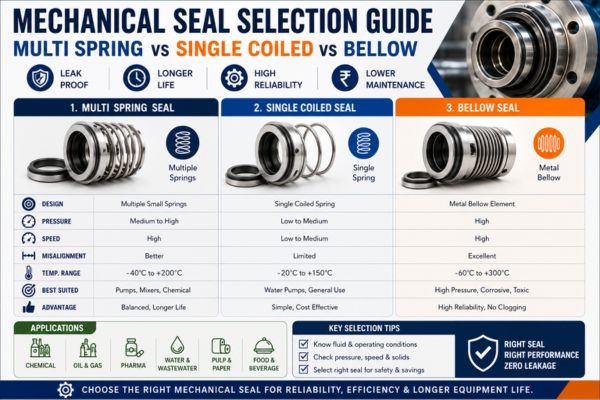
Infographic comparing multi-spring, single-coiled, and bellow mechanical seals with specification tables for pressure, temperature, and ideal applications.

Mechanical Seal Selection Guide: Multi Spring vs Single Coiled vs Bellow Mechanical Seals

The Role of Mechanical Seals in Industrial Fluid Management Industrial fluid management relies heavily on securing liquids safely inside pipelines and equipment. Centrifugal pumps move billions of liters of water, harsh chemicals, and thick slurry every single day across the globe. The critical junction where the stationary pump casing meets the rapidly rotating shaft is…
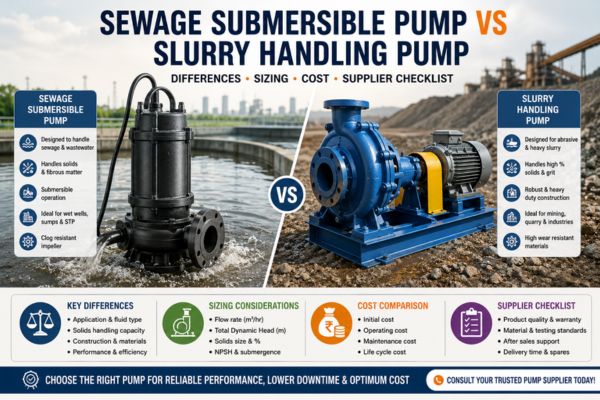
Infographic comparing a sewage submersible pump and a slurry handling pump, including sizing and operating costs

Sewage Submersible Pump vs Slurry Handling Pump

Key Differences in Solids, Wear, Installation and Cost Handling industrial wastewater and thick abrasive fluids is a significant challenge for plant operators across the world. When liquids contain heavy solid particles, organic waste or corrosive chemicals, standard clear water pumps fail almost immediately. In environments like chemical plants, construction sites and municipal wastewater facilities, selecting…

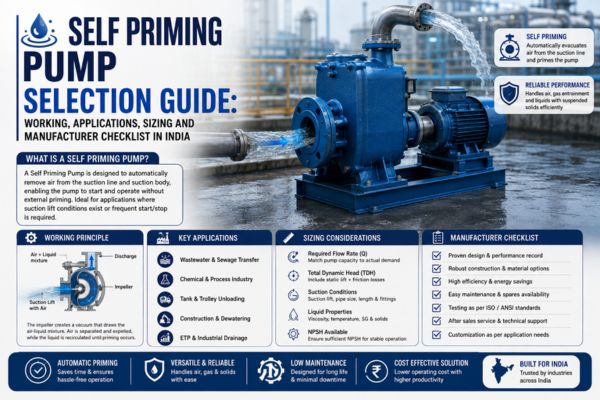
Infographic showing a self priming pump, its working principle, applications and sizing checklist

Self Priming Pump Selection Guide: Working, Applications, Sizing and Manufacturer Checklist in India

How It Works, Where It Is Used and How to Size It Managing liquids efficiently is the backbone of any continuous industrial process. However, moving fluids from underground tanks, deep sumps or unpressurized vessels often presents a major engineering challenge. A standard centrifugal pump operates beautifully when liquid flows directly into its suction port under…

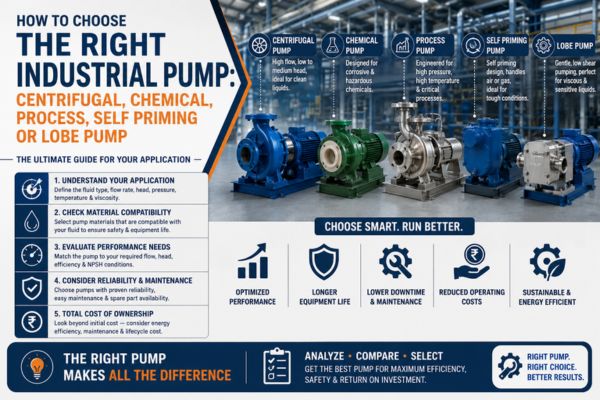
Infographic comparing centrifugal, chemical process, self priming and lobe pumps for industrial applications

How to Choose the Right Industrial Pump: Centrifugal, Chemical, Process, Self Priming or Lobe Pump

Centrifugal, Chemical Process, Self Priming and Lobe Pumps Compared Selecting an industrial pump for your plant is one of the most critical engineering decisions you will make. In many manufacturing units, pumps run continuously for hours, handling everything from cooling water to aggressive acids and thick syrups. When a pump works well, nobody notices it.…

Chemical Pump Types Materials and Selection Guide

Handling aggressive industrial fluids is a dangerous and highly specialized task. A standard water pump will fail quickly if you use it to move strong acids, toxic solvents, or highly caustic liquids. To prevent dangerous leaks and plant shutdowns, facilities rely on specialized equipment designed specifically for these harsh environments. Understanding the different chemical pump…

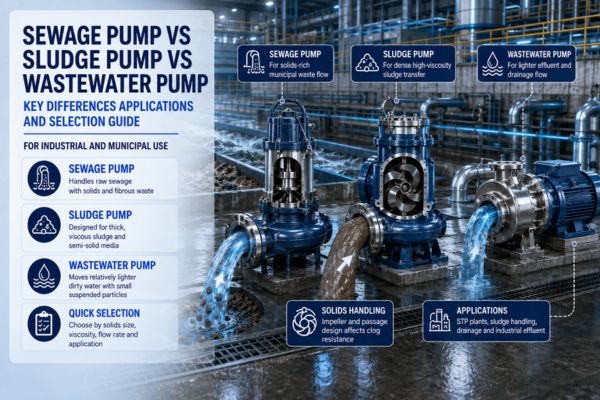
Sewage, sludge and wastewater pump comparison showing solids handling and fluid differences

Sewage Pump vs Sludge Pump vs Wastewater Pump

Managing dirty water in an industrial plant or municipal facility is a challenging task. Plant engineers and operators must move millions of liters of fluid every day. However, not all dirty water is the same. Some fluids contain large solids, some are thick like mud, and others are mostly clear. Because fluids behave differently, using…

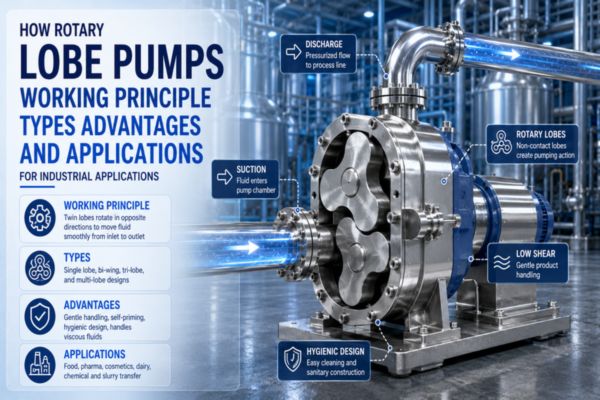
Rotary lobe pump cutaway infographic showing opposing lobes, suction, discharge and low-shear flow

Rotary Lobe Pump Working Principle Types Advantages and Applications

Handling thick, sticky, or delicate liquids requires specialized industrial equipment. When standard centrifugal pumps fail, plant engineers turn to robust positive displacement pumps to get the job done. Among these, the lobe pump stands out for its exceptional performance. Understanding the rotary lobe pump working principle helps operators maintain their equipment better and improve plant…