

Handling aggressive industrial fluids is a dangerous and highly specialized task. A standard water pump will fail quickly if you use it to move strong acids, toxic solvents, or highly caustic liquids. To prevent dangerous leaks and plant shutdowns, facilities rely on specialized equipment designed specifically for these harsh environments.
Understanding the different chemical pump types, how they work, and what materials they use is critical for plant safety. In this detailed guide, the experts at Rinku Engineers explain everything you need to know about choosing the safest and most efficient industrial chemical pump for your processing plant.
What Is a Chemical Pump?
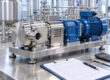
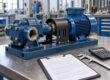
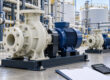
A Chemical Pump is a heavy-duty industrial machine engineered specifically to transfer corrosive, toxic, or abrasive liquids safely. Manufacturers build these pumps using specialized, highly resistant materials like engineered plastics or exotic metal alloys.
Unlike standard pumps, a chemical process pump features specialized sealing mechanisms to prevent hazardous fumes or liquids from escaping into the factory. Facilities use them strictly for safely handling fluids that would rapidly destroy standard cast iron or brass equipment.
How Is a Chemical Pump Different from a Water Pump?
The main difference lies in the construction materials and sealing technology. A water pump typically uses cast iron, bronze, or standard stainless steel components. An industrial chemical pump uses highly resistant materials like Polypropylene, PVDF, Teflon (PTFE), or Hastelloy.
Additionally, a chemical handling pump features heavy-duty mechanical seals or sealless magnetic drives. These advanced designs ensure that dangerous, volatile liquids do not leak into the environment, protecting both the workers and the surrounding ecosystem.
How Does a Chemical Pump Work?
Most chemical pumps work by converting electrical energy from a motor into kinetic energy. When the motor spins, it turns an internal component—like an impeller or a gear—that physically moves the fluid.
The spinning action creates a pressure difference inside the pump casing. This vacuum draws the chemical into the pump inlet. The internal mechanism then pushes the liquid outward with great force, discharging it safely through the plant’s piping system.
Main Types of Chemical Pumps
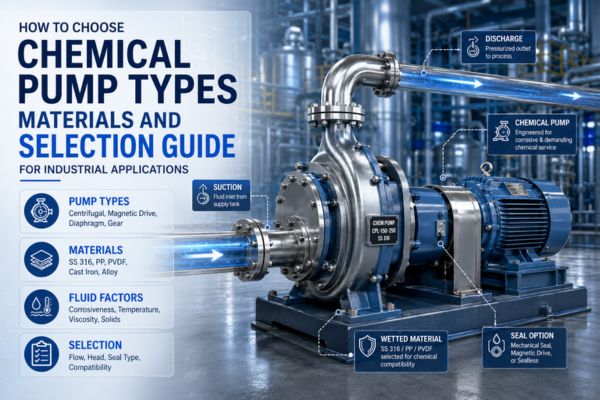
Different industrial applications require different chemical pump types. Here are the most common variations used in modern processing plants:
Overview of Chemical Pump Types
| Chemical Pump Type | Working Principle | Suitable Liquid | Main Advantage | Common Application |
|---|---|---|---|---|
| Centrifugal Chemical Pump | Spinning impeller creates flow | Thin, corrosive liquids | High flow rates | Bulk chemical transfer |
| Magnetic Drive Pump | Magnetic coupling rotates impeller | Toxic or hazardous chemicals | Zero leakage (sealless) | Pumping hazardous acids |
| Air-Operated Diaphragm | Air pushes flexible diaphragms | Abrasive or flammable liquids | Explosion-proof | Solvent and slurry transfer |
| Gear Pump | Interlocking gears move fluid | High-viscosity fluids | High pressure capabilities | Pumping resins and syrups |
| Dosing Pump | Controlled stroke displacement | Chemicals requiring precision | Exact volume delivery | Water treatment chemical injection |
| Vertical Chemical Pump | Submerged centrifugal impeller | Corrosive sump fluids | Saves floor space | Emptying chemical pits |
| Drum Transfer Pump | Small impeller on a long shaft | Chemicals in small batches | Portable and safe | Emptying 200-liter barrels |
Common Chemical Pump Materials
Choosing the right material is the most important part of chemical pump selection. Different chemicals react aggressively with different materials based on temperature and concentration.
Polypropylene
Polypropylene (PP) is a strong, lightweight plastic that resists many common acids and alkalis. It is an extremely cost-effective choice for general chemical transfer at moderate temperatures.
PVDF
PVDF (Polyvinylidene fluoride) is a high-performance engineered plastic. It offers significantly better chemical resistance and handles much higher temperatures than standard polypropylene.
PTFE
PTFE, commonly known as Teflon, offers near-universal chemical resistance. Manufacturers line the inside of metal pumps with PTFE to handle the most highly corrosive and reactive chemicals known in the industry.
Stainless steel 316
SS 316 is a durable, versatile metal used widely in food, pharmaceutical, and mild chemical applications. While excellent for solvents and organics, it struggles with highly concentrated inorganic acids like hydrochloric acid.
Cast iron
Cast iron is physically tough but has poor resistance to corrosive chemicals. Engineers typically reserve cast iron for transferring concentrated sulfuric acid (which forms a protective layer) or non-corrosive industrial liquids.
Special alloys
For extreme conditions, pump manufacturers use exotic metals like Hastelloy, Titanium, or Alloy 20. These special alloys handle highly aggressive, high-temperature chemicals that would destroy standard metals and plastics.
Chemical Pump Material Comparison
| Pump Material | Chemical Resistance | Temperature Consideration | Common Application | Limitation |
|---|---|---|---|---|
| Polypropylene (PP) | Good for standard acids/alkalis | Typically up to 80°C | Water treatment, mild acids | Melts/deforms at high temps |
| PVDF | Excellent for halogens/strong acids | Typically up to 120°C | Fine chemicals, strong acids | More expensive than PP |
| PTFE (Teflon) | Universal chemical resistance | Can exceed 150°C | Highly aggressive corrosives | Very high cost |
| Stainless Steel 316 | Good for organics and solvents | Handles very high heat | Pharma, food, mild chemicals | Corrodes quickly in chlorides |
| Special Alloys | Outstanding for specific acids | Handles extreme heat | Refineries, boiling acids | Very expensive and heavy |
How to Check Chemical Compatibility
You must never assume a pump material is safe without checking a chemical compatibility chart. These charts rate how well a specific material survives exposure to a specific chemical.
Always check the chemical at its exact operating temperature and concentration. A chemical transfer pump made of stainless steel might easily handle 10% sulfuric acid at room temperature, but it will corrode rapidly if the acid reaches 50% concentration or the temperature rises.
Sealed vs Sealless Chemical Pumps
A sealed pump uses a mechanical seal on the spinning shaft to keep liquid inside the casing. While cheaper to buy, seals can eventually wear out and leak small amounts of toxic fumes or fluids.
A sealless pump, like a magnetic drive pump, has no mechanical seal at all. A solid containment shell completely isolates the liquid, providing absolute zero-leakage operation. Sealless pumps are mandatory for highly dangerous, toxic, or expensive chemicals.
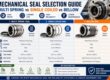
Mechanical Seal Options for Chemical Pumps
If you choose a sealed pump, the mechanical seal must withstand the chemical attack. A single mechanical seal works well for basic chemical transfer.
For more hazardous fluids, engineers use a double mechanical seal with a barrier fluid for extra protection. The seal faces themselves are usually made of highly durable materials like Silicon Carbide (SiC) or Ceramic, with chemical-resistant PTFE bellows.
How to Select the Right Chemical Pump
Selecting a pump requires careful attention to the specific fluid dynamics of your system.
How Do I Select a Chemical Pump?
To correctly size and select a chemical pump, you must identify the exact chemical name, its concentration, and the operating temperature. These factors determine material compatibility and the correct seal type. Next, calculate the viscosity, required flow rate, and required head to choose the right pump type and motor size for safe operation.
Important Selection Parameters
Chemical name
You must know the exact chemical name or fluid mixture. Complex mixtures often behave differently than pure chemicals and require special material considerations.
Chemical concentration
Concentration drastically changes how a chemical attacks a pump. Concentrated acids behave entirely differently than diluted acids, often requiring completely different pump materials.
Temperature
High temperatures accelerate corrosion rapidly. A plastic chemical pump that is perfectly safe at 30°C may melt or degrade instantly if the chemical temperature rises to 90°C.
Viscosity
Viscosity measures how thick a liquid is. Centrifugal pumps easily handle thin liquids like water, but thick liquids like syrup or oil require a positive displacement gear pump.
Specific gravity
Specific gravity relates to the weight of the chemical compared to water. Heavy chemicals require a much larger electric motor to prevent the pump from stalling or overheating.
Vapour pressure
If the liquid evaporates easily, it has a high vapour pressure. Pumping these liquids incorrectly can cause cavitation, which severely damages the internal pump components.
Flow rate
Flow rate defines the volume of liquid you need to move per hour or minute. This dictates the physical size of the pump casing and the internal impeller.
Total head
Total head measures the total pressure the pump must generate. It includes the vertical height the fluid must be lifted and the friction lost inside the piping system.
Solid content
If the chemical contains hard solid particles, crystals, or sludge, it will quickly destroy a standard pump. You must specify an open impeller or a specialized slurry pump to handle solid
Installation conditions
Consider where the pump will live. Will it be indoors, outdoors, or submerged? If the area has explosive gases, you must select an ATEX-certified flameproof motor for safety.
Pumps for Common Industrial Chemicals
Common Chemical Pump Selection Mistakes
The biggest mistake buyers make is ignoring the operating temperature. Many people choose a cheap plastic pump without realizing their chemical process exceeds the material’s thermal limits.
Another common error is providing the wrong flow and head requirements, leading to oversized or undersized motors. Finally, forgetting to verify the mechanical seal material leads to rapid seal failure, even if the pump casing perfectly matches the chemical.
Chemical Pump Maintenance and Safety Tips
Always wear proper personal protective equipment (PPE) before inspecting a chemical process pump. Regularly check the area beneath the pump for small drips that indicate a failing mechanical seal.
Monitor the pump for unusual vibrations or loud noises, which often signal internal bearing wear or cavitation. Ensure you thoroughly flush the pump with clean water or a neutralizer before disassembling it for routine maintenance.
Chemical Pump Selection Checklist
Before contacting a chemical pump supplier, gather this data:
- Fluid name and exact concentration
- Maximum and minimum operating temperature
- Required flow capacity (LPM or m3/hr)
- Total discharge head requirement
- Presence of any solid particles
- Motor power supply details
Chemical Pump Manufacturer Supplier and Exporter in Ahmedabad
Are you looking for a reliable fluid handling partner? Rinku Engineers is a premier chemical pump manufacturer, supplier, and exporter in Ahmedabad, Gujarat, India. Under our trusted AYUSH PUMPS brand, we build high-quality solutions for the most demanding industrial environments.
We specialize in providing application-based pump selection to ensure your equipment lasts longer. Our team offers detailed chemical compatibility guidance, extensive material options, and precise mechanical seal selection for any aggressive fluid. From initial consultation to final delivery, we maintain strict quality inspection and rigorous pump testing standards.
We also provide sturdy export packaging for our international clients. Whenever you need technical assistance or rapid spare-parts support, Rinku Engineers is here to help keep your chemical plant running smoothly and safely without unplanned downtime.
Choosing a Chemical Pump Manufacturer Supplier and Exporter
When selecting a chemical process pump manufacturer, look for a company with proven engineering expertise. A good supplier will never sell you a pump without first thoroughly verifying your chemical data. Choose a partner like Rinku Engineers who offers comprehensive after-sales support, easily accessible spare parts, and transparent technical guidance.
Rinku Engineers Chemical Pump Solutions
At Rinku Engineers, we understand that handling dangerous chemicals leaves zero room for error. We proudly manufacture a wide range of industrial fluid solutions, from PP process pumps to specialized heavy-duty chemical handlers. Visit our Homepage to explore our complete range of robust pumping solutions.
Conclusion
Understanding different chemical pump types, materials, and precise sizing parameters is the only way to ensure safety and efficiency in your processing plant. By carefully analyzing your fluid’s concentration, temperature, and physical properties, you can select an industrial chemical pump that provides years of reliable, leak-free service.
To get the perfect pump for your plant, contact Rinku Engineers today. Please share your chemical name, concentration, temperature, viscosity, required capacity, discharge head, material preference, and installation conditions with our team for a fast, accurate technical proposal!
Frequently Asked Questions (FAQs)
A chemical pump is a specialized industrial pump designed to handle corrosive, toxic, abrasive, or highly reactive fluids safely. Unlike standard water pumps, they are built using specialized resistant materials and heavy-duty seals to prevent dangerous plant leaks.
The best pump for corrosive chemicals is a centrifugal process pump or a magnetic drive pump made from highly resistant materials. Polypropylene (PP), PVDF, or PTFE-lined pumps are the most popular choices for handling aggressive co).
Material suitability depends entirely on the specific acid, its concentration, and temperature. Generally, Polypropylene (PP) handles mild acids well, PVDF handles strong acids at higher temperatures, and PTFE (Teflon) handles almost all highly aggressive, boiling acids.
Polypropylene (PP) is cost-effective and handles many standard chemicals up to 80°C. PVDF is a much stronger, higher-grade engineered plastic that provides superior chemical resistance and can handle much harsher chemicals and higher temperatures, typical
Yes, a centrifugal chemical pump is the most common type of pump used in the chemical industry. As long as the casing, impeller, and mechanical seals are made from chemical-compatible materials, they are highly efficient for bulk liquid transf
A magnetic drive chemical pump uses a magnetic coupling to turn the impeller instead of a direct mechanical shaft. This sealless design completely eliminates the mechanical seal, ensuring zero leakage of highly toxic, dangerous, or expensive chemicals.
For thick, high-viscosity fluids like heavy oils, syrups, or resins, a positive displacement gear pump is the best choice. Centrifugal pumps lose efficiency and struggle to move thick fluids, whereas gear pumps push heavy liquids with ease.
Chemical pump seals usually fail due to incorrect material selection, running the pump completely dry, or exceeding the pump’s maximum temperature limits. Chemical crystallization around the seal faces and abrasive solid particles in the liquid also cause rapid wear and failure.
Engineers check chemical compatibility by consulting standardized industrial resistance charts. They must cross-reference the exact chemical name, its specific concentration, and its maximum operating temperature against the proposed pump material (like PP, PVDF, or Stainless Steel).
Choose an experienced chemical pump manufacturer in Ahmedabad, like Rinku Engineers, who provides detailed application-based selection guidance. Look for a supplier who verifies chemical compatibility, conducts strict pump testing, and provides reliable spare-parts support for your equipment.