

Managing dirty water in an industrial plant or municipal facility is a challenging task. Plant engineers and operators must move millions of liters of fluid every day. However, not all dirty water is the same. Some fluids contain large solids, some are thick like mud, and others are mostly clear.
Because fluids behave differently, using the wrong pump will quickly cause clogs, motor failures, and expensive plant shutdowns. To keep your treatment plant running smoothly, you must understand the differences between a sewage pump vs sludge pump vs wastewater pump. In this comprehensive guide, the industrial fluid experts at Rinku Engineers explain how to select the right equipment for your facility.
Quick Answer: Sewage Pump vs Sludge Pump vs Wastewater Pump
What Is the Difference Between a Sewage Pump Sludge Pump and Wastewater Pump?
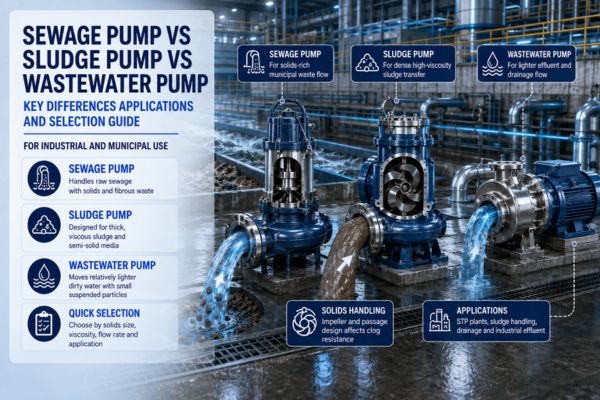
Sewage pumps handle raw sewage containing large solids, human waste, and debris like plastics. Sludge pumps handle thick, highly concentrated mud and organic sludge from settling tanks. Wastewater pumps handle broader applications, transferring either treated or untreated effluent with fewer solids. Final selection depends entirely on your specific fluid properties and plant operating conditions.
What Is a Sewage Pump?
A sewage pump is a heavy-duty machine designed to move raw, untreated waste from residential, commercial, or municipal sources. A standard raw sewage pump handles human waste, toilet paper, and large debris without clogging.
These pumps feature specialized impellers with large internal clearances. This open design allows solid objects to pass completely through the pump casing. Plant operators often install a Sewage Submersible Pump directly inside deep underground collection pits to lift raw waste to the surface.
What Is a Sludge Pump?
A sludge pump is built specifically for moving heavy, thick, and highly viscous materials. In a treatment plant, the biological and chemical waste settles at the bottom of large tanks, creating a thick mud called sludge.
Standard water pumps cannot move this thick material. A Sludge Transfer Pump typically uses positive displacement technology or a heavily reinforced centrifugal design with a high-torque motor. It creates the immense pressure needed to push thick, heavy mud through the plant’s piping system.
What Is a Wastewater Pump?
A wastewater pump is a broader term for a machine that moves water that has been used in an industrial or domestic process. This water might contain chemicals, oils, or light dirt, but it generally lacks large solids or thick mud.
An industrial wastewater pump is highly versatile. Facilities use them to transfer semi-treated water between processing tanks or to discharge clean, treated effluent safely into rivers or municipal drains.
Main Differences Between Sewage Sludge and Wastewater Pumps
Understanding how these pumps differ internally helps operators prevent expensive equipment failures.
Difference in Fluid Characteristics
A sewage transfer pump moves water filled with large organic solids and household debris. A sludge pump moves thick, dense mud that behaves more like a solid than a liquid. An effluent transfer pump moves mostly liquid water containing dissolved chemicals or very small, suspended dirt particles.
Difference in Solid-Handling Capacity
Solid handling is a critical factor. Sewage pumps easily pass large solids, often up to 50mm or 100mm in diameter, without getting stuck. Sludge pumps handle very heavy concentrations of small solids, but they struggle with large items like rags. Wastewater pumps typically handle only small solids or completely clear fluid.
Difference in Viscosity Handling
Viscosity measures how thick a fluid is. Sewage is mostly water, so it has low viscosity. Wastewater is also thin and flows easily. Sludge, however, is incredibly thick. Sludge pumps require massive motor power just to push this highly viscous material through a pipe.
Difference in Pump Design
Sewage pumps usually feature non-clog or vortex centrifugal impellers. Sludge pumps often utilize heavy-duty positive displacement designs, like lobe pumps or progressive cavity pumps, to force the thick mud forward. Wastewater pumps mostly use standard centrifugal closed or semi-open impellers for maximum flow efficiency.
Difference in Installation
Engineers typically install sewage pumps submerged at the bottom of deep underground pits. Sludge pumps are mostly installed on the surface (dry pit) so workers can easily maintain their seals and motors. Wastewater pumps can be either surface-mounted or submersible, depending on the tank design.
Common Sewage Pump Applications
- Municipal sewage lifting stations
- Residential complex underground waste pits
- Hospital and hotel raw waste collection
- Shopping mall basement drainage
Common Sludge Pump Applications
- Moving settled mud from clarifier tanks
- Feeding thick waste into filter presses
- Transferring digested sludge to drying beds
- Pumping thick chemical slurries
Common Wastewater Pump Applications
- Transferring semi-treated water between ETP tanks
- Pumping industrial cooling water runoff
- Discharging clean effluent into rivers
- Stormwater a
Pump Types Used for Each Application
Choosing the right type of pump technology ensures long-lasting performance. Facilities rely on specific machines for different stages of the treatment cycle.
Comparing Sewage, Sludge, and Wastewater Pumps
| Comparison Factor | Sewage Pump | Sludge Pump | Wastewater Pump |
|---|---|---|---|
| Fluid Type | Raw waste, toilet debris | Thick mud, biological waste | Industrial runoff, effluent |
| Solid Size | Large (rags, plastics) | Small (grit, sand, mud) | Small to None |
| Solid Concentration | Low to Medium | Very High | Low |
| Viscosity | Low (water-like) | High (thick and sticky) | Low (water-like) |
| Pump Design | Centrifugal vortex/non-clog | Positive displacement / Heavy centrifugal | Centrifugal closed/semi-open |
| Installation Type | Mostly submersible | Mostly surface (dry pit) | Submersible or surface |
| Common Industry | Municipal, Residential | Treatment Plants, Mining | Manufacturing, Chemical |
| Typical Application | Lifting raw sewage from pits | Emptying clarifier tank bottoms | Transferring treated water |
| Clogging Risk | High (if undersized) | Low (if solids are small) | Medium (if solids enter) |
| Maintenance Requirement | Medium | High | Low to Medium |
How to Select the Correct Pump
Working with an experienced pump manufacturer prevents costly sizing errors. You must evaluate several technical factors before buying a pump.
Important Pump-Sizing Factors
Flow rate: You must calculate exactly how many liters of fluid you need to move per hour.
Total dynamic head: This measures the total physical height the fluid must climb, plus the friction resistance inside the pipes.
Solid size: Always measure the largest solid object expected in the water to select the correct internal impeller clearance.
Solid concentration: Measure the percentage of solid material mixed into the liquid. High concentrations require stronger pump motors.
Fluid viscosity: Thick liquids reduce a pump’s efficiency. You will need a larger motor and a specific pump design to handle thick sludge safely.
Chemical content: If the water contains acidic or highly alkaline chemicals, you must use a pump made of special corrosion-resistant materials like stainless steel.
Temperature: Hot industrial runoff will destroy a standard pump’s mechanical seals. Always verify the maximum liquid temperature.
Installation depth: Determine if the pump will sit safely on the surface or if it must be submerged deep underwater.
Operating hours: Decide if the pump will run continuously for 24 hours a day or only intermittently for a few minutes.
Common Pump Selection Mistakes
The most common mistake plant managers make is using a standard water pump to move raw sewage. The large solids quickly wrap around the impeller and burn out the motor. Another major mistake is ignoring fluid viscosity. If you try to pump thick sludge with a small centrifugal pump, the motor will immediately overheat and stall.
Maintenance Requirements
Proper maintenance keeps your treatment plant running without interruptions. Sewage pumps require regular visual inspections to remove heavy rags wrapped around the impeller. Sludge pumps need frequent mechanical seal replacements and oil checks due to the high-pressure work they perform. Wastewater pumps require basic bearing lubrication and routine motor temperature checks.
Which Pump Should You Choose?
Use this simple decision guide to find the right equipment.
Choose a Sewage Pump When:
- You are moving raw, untreated human waste.
- The liquid contains large solids, toilet paper, or plastics.
- You need to lift waste from a deep underground collection pit.
- You are setting up a municipal lifting station.
- The fluid has a very low viscosity.
Choose a Sludge Pump When:
- You are pumping thick, dense mud from a settling tank.
- The fluid has a very high viscosity.
- The fluid contains a high concentration of heavy sand or grit.
- You are feeding waste into a mechanical filter press.
- You require a high-torque motor to push heavy material.
Choose a Wastewater Pump When:
- You are moving mostly clear or semi-treated effluent.
- The water contains industrial chemicals or light dirt.
- There are no large solid objects in the liquid.
- You are transferring water between general treatment tanks.
- You need to discharge clean water safely into the environment.
Choosing a Sewage Sludge and Wastewater Pump Manufacturer
Finding the right equipment means partnering with a reliable manufacturer. Look for a company that offers application-based technical guidance and takes time to understand your fluid properties before selling you a pump.
Sewage Sludge and Wastewater Pump Manufacturer in Ahmedabad
Rinku Engineers is a leading sewage, sludge, and wastewater pump manufacturer in Ahmedabad. Under our trusted AYUSH PUMPS brand, we engineer heavy-duty fluid handling solutions for demanding environments. As a trusted sludge pump supplier in Gujarat, we help industries overcome complex pumping challenges through detailed fluid analysis and specific solid-handling requirements.
Our engineering team carefully evaluates your installation conditions to recommend the perfect pump material, whether it is cast iron or stainless steel. Every unit undergoes strict quality inspection before dispatch.
Furthermore, as a prominent wastewater pump exporter from India, we provide secure export packaging for safe global delivery. From initial technical guidance to reliable spare-parts availability and strong after-sales support, Rinku Engineers ensures your treatment facility operates smoothly without unplanned downtime.
Rinku Engineers Pump Solutions
Conclusion
Understanding the difference between a sewage pump vs sludge pump vs wastewater pump is the key to maintaining a highly efficient treatment facility. Sewage pumps easily handle large debris, sludge pumps push thick mud with immense power, and wastewater pumps efficiently transfer industrial effluent. By matching the right machine to your fluid, you protect your plant from expensive breakdowns and keep your operations running smoothly.
Are you ready to upgrade your treatment plant’s pumping system? Contact Rinku Engineers today. To help our experts select the perfect pump for you, please share your fluid type, solid size, solid concentration, viscosity, flow rate, total head, temperature, installation depth, and operating conditions.
Frequently Asked Questions (FAQs)
No. Sewage is a specific type of wastewater that contains raw human waste, toilet paper, and large organic solids from residential or municipal sources. Wastewater is a broader term that includes industrial runoff, chemical water, and lightly dirty effluent from factories.
Usually, no. While a sewage pump handles large solids like rags, it is designed for fluids that flow easily like water. Sludge is incredibly thick and highly viscous. Trying to pump thick sludge with a standard sewage pump will likely overheat and stall the motor.
A heavy-duty positive displacement pump or a reinforced sludge transfer pump is the best choice. These pumps feature high-torque motors and specialized internal designs capable of physically pushing thick, dense mud without losing efficiency or clogging.
A Sewage Treatment Plant (STP) uses multiple pumps. Operators use submersible sewage pumps to lift raw waste, sludge pumps to move settled mud from clarifiers, and centrifugal wastewater pumps to transfer the final treated water out of the plant.
An Effluent Treatment Plant (ETP) handles industrial wastewater. They rely on chemical-resistant wastewater treatment pumps made from stainless steel or engineered plastics. They also use sludge pumps to manage the heavy chemical mud left over after the treatment process.
Most standard wastewater pumps can only handle very small, suspended particles like light dirt or sand. If large solids, rags, or plastics enter a standard wastewater pump, they will get stuck in the closed impeller and cause a total pump failure.
Engineers size a sewage pump by calculating the maximum required flow rate (liters per minute) and the total dynamic head (the vertical lifting distance plus pipe friction). They also strictly consider the maximum size of the solid waste entering the system.
Sludge pumps usually clog when unexpected large solids—like plastic bags, rocks, or long rags—enter the system and jam the internal mechanisms. They can also clog if the sludge becomes too dry or if the pump is incorrectly sized for the fluid’s viscosity.
Yes, a submersible sewage pump is highly suitable and is the industry standard for underground collection pits. They are designed to operate safely underwater, keeping loud motor noise and foul odors trapped below the surface while lifting the waste.
Choose an experienced manufacturer like Rinku Engineers who offers detailed application-based selection. Ensure they analyze your fluid viscosity and solid size before recommending a pump. Also, verify that they provide rigorous quality testing, easy spare-parts availability, and dependable after-sales support.