


What Is an STP Pump Full Form Working Types and Applications
Managing wastewater is a critical task for any modern city or industrial facility. At the heart of this process is the reliable STP pump. This heavy-duty industrial wastewater pump keeps sewage moving safely and efficiently through the entire treatment cycle.
Without a proper pumping system, wastewater would quickly back up, causing serious health hazards and environmental damage. These pumps are specially engineered to handle tough conditions that standard water pumps cannot survive. In this comprehensive guide, we will explore everything you need to know about these essential machines with the experts at Rinku Engineers.
What Is the Full Form of STP?
The full form of STP is Sewage Treatment Plant. An STP is a specialized industrial facility designed to remove harmful contaminants from municipal or industrial wastewater.
The ultimate goal of this plant is to produce clean, treated water. This purified water is then safe to release back into the natural environment or reuse for agricultural and industrial purposes.
What Is an STP Pump?
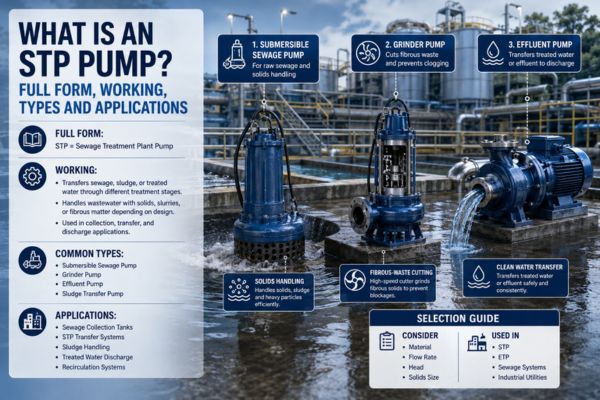
An STP pump is a heavy-duty industrial pump used to move raw sewage, sludge, and wastewater through a sewage treatment plant. Its basic function is to transfer thick, solid-laden liquids from one treatment stage to the next, preventing blockages and ensuring a smooth, continuous water purification process.
These machines are built with highly durable materials and specialized designs. A regular water pump would quickly clog or break if it tried to move the rags, plastics, and solid organic waste found in raw sewage.
Why Are Pumps Required in a Sewage Treatment Plant?
Gravity alone cannot move millions of liters of water through a large treatment facility. Plants need a reliable sewage treatment plant pump to lift wastewater from deep underground collection pits up to surface-level treatment tanks.
Pumps also safely move thick sludge out of settling tanks so it can be processed. They create the necessary pressure to push water through mechanical filters and chemical dosing systems. Simply put, pumps act as the heart of the treatment plant, keeping the fluid flowing continuously without costly interruptions.
How Does an STP Pump Work?
Most sewage pumps use powerful centrifugal force to move heavy liquids. An electric motor turns a metal shaft that is connected to an impeller inside the pump casing.
When wastewater enters the pump, the rapidly spinning impeller pushes the liquid outward with great force. This physical action creates high pressure that drives the wastewater up and out through the discharge pipe. The pumps used in sewage treatment plants often feature special open or vortex impellers designed to pass solid waste safely without getting stuck.
Main Components of an STP Pumping System
A complete pumping system consists of several durable internal parts. The heavy-duty motor provides the electrical power required to drive the pump. The impeller is the rotating component that physically pushes the dirty water.
The volute casing directs the flow of water out of the pump and into the pipes. A strong mechanical seal acts as a barrier to keep dirty water from entering and destroying the electrical motor. Finally, sturdy bearings support the spinning shaft, reducing friction and wear during continuous operation.
Types of Pumps Used in an STP
Different stages of wastewater treatment require different machines. Here are the main types of pumps you will find in a modern facility:
Submersible sewage pump
A Sewage Submersible Pump operates entirely underwater. Workers install these pumps directly inside the deep sewage collection pit. They are excellent for lifting raw sewage into the main plant while keeping loud noise and foul odors trapped safely below ground.
Non-clog sewage pump
This pump features a specialized impeller design that allows rags, plastics, and large solids to pass through safely. The non-clog design is absolutely essential for handling raw municipal wastewater without experiencing frequent breakdowns and manual cleaning.
PTFE
PTFE, commonly known as Teflon, offers near-universal chemical resistance. Manufacturers line the inside of metal pumps with PTFE to handle the most highly corrosive and reactive chemicals known in the industry.
Centrifugal wastewater pump
These are highly versatile surface pumps used mostly for moving treated or semi-treated water. They offer excellent flow rates and are very easy for plant operators to access for routine maintenance and inspection.
Chemical dosing pump
Treatment plants must add specific chemicals to clean and balance the water properly. A dosing pump accurately injects small, precisely measured amounts of chlorine or other purifying chemicals directly into the flowing wastewater stream.
Dewatering pump
A dewatering pump removes excess liquid from sludge before the plant disposes of the solid waste. It is also frequently used to pump out and clear flooded areas or maintenance pits within the facility.
Comparison of STP Pumps
| Pump Type | Fluid Handled | Solid Handling | Installation Type | Common STP Application |
|---|---|---|---|---|
| Submersible Sewage Pump | Raw sewage and wastewater | High (large solids) | Underwater (Submerged) | Lifting raw sewage from deep pits |
| Sludge Transfer Pump | Thick sludge and mud | High (thick solids) | Surface or Submerged | Moving settled sludge from clarifiers |
| Centrifugal Wastewater Pump | Semi-treated or clear water | Low to Medium | Surface (Dry pit) | Transferring water between treatment tanks |
| Non-Clog Pump | Raw sewage with debris | Very High (rags, plastics) | Surface or Submerged | Pumping untreated municipal waste |
| Dosing Pump | Liquid chemicals | None | Surface | Injecting chlorine or treatment chemicals |
| Dewatering Pump | Dirty water and light sludge | Medium | Submerged or Surface | Removing water from sludge holding tanks |
Applications of STP Pumps
These robust pumps serve many different sectors and industries. You will find them heavily utilized in municipal water treatment facilities, residential apartment complexes, and large hospitals.
They are also crucial for industrial factories, hotels, and commercial shopping malls. Any large building or industrial facility that generates a high volume of liquid waste requires a dependable pumping system to manage it safely and legally.
Different Stages Where Pumps Are Used in an STP
Pumps remain active throughout the entire wastewater treatment cycle. In the primary stage, they lift raw sewage from underground sewers into the screening area.
During the secondary stage, pumps move the screened water into large aeration tanks where natural bacteria break down the organic waste. In the final stages, an STP sludge pump moves the settled waste away, while other pumps push the clean, treated water out into rivers or irrigation systems.
What Types of Fluids Can an STP Pump Handle?
An industrial wastewater pump is a highly versatile machine. It easily handles raw sewage filled with organic waste, toilet paper, and debris. It also safely moves thick, abrasive sludge mixed with heavy sand and grit.
Furthermore, these pumps can transfer chemically treated water, soapy drainage from commercial laundries, and highly acidic or alkaline industrial effluents containing various liquid byproducts.
How to Select the Correct STP Pump
Choosing the right pump ensures a long operating life and significantly lower energy bills. You must match the pump’s capabilities to the exact nature of your wastewater. Selecting an incorrect pump will quickly lead to constant clogging, burned-out motors, and very expensive downtime for your entire facility.
Important STP Pump Selection Factors
Required flow rate
Flow rate measures how much water the pump can move in a single hour. You must accurately calculate the peak volume of wastewater your plant receives to choose a pump that can comfortably keep up with the demand.
Total head
Total head refers to the vertical distance the pump must push the water, plus the friction resistance inside the pipes. The pump must generate enough pressure to easily overcome this total physical distance.
Solid size
Always measure the largest solid objects expected to flow in the water. Choose a non-clog sewage transfer pump with an internal clear passage size larger than those solids to prevent jams.
Sludge concentration
Thick sludge requires much more mechanical power to move than dirty water. If the fluid is very heavy, you will need a specialized sludge pump equipped with a stronger motor to prevent stalling.
Fluid temperature
Hot industrial wastewater can rapidly damage standard pump seals and cause the motor to overheat. Always check the maximum temperature rating of the pump if you are pumping hot industrial effluent.
Pump material
Corrosive chemicals and highly abrasive sand will destroy a standard cast-iron pump very quickly. For tough environments, choose a wastewater pump supplier that offers pumps made from durable stainless steel or special hardened alloys.
Motor rating
The electric motor must have enough horsepower to run efficiently without constantly overheating. A motor that is sized too small will easily burn out when placed under a heavy sludge load.
Installation depth
If the collection tank is very deep, you must use a submersible sewage pump. Make sure the pump’s outer casing and cable seals are safely rated for the specific water pressure at the bottom of your deep pit.
Continuous or intermittent operation
Some plant pumps only run for a few minutes a day, while others run 24/7 without stopping. Always select a heavy-duty pump designed specifically for continuous duty if your plant operates constantly.
Common STP Pump Problems
Even the best-engineered pumps can face occasional issues. Clogging is the most common problem, usually caused by long rags or plastics wrapping tightly around the impeller.
Motor failure can easily happen if the pump accidentally runs dry or overheats in hot water. Worn mechanical seals can leak dirty water into the motor housing, causing a direct short circuit. Finally, low flow rates often indicate a partially blocked pipe or a heavily worn-out impeller.
STP Pump Maintenance Checklist
Regular maintenance keeps your critical pumping system running smoothly all year. Check the oil levels in the mechanical seal chamber every few months to ensure proper lubrication.
Inspect the impeller for signs of physical wear and manually remove any tangled debris. Test the electrical cables for damage and closely monitor the motor’s operating temperature. Finally, ensure the control panel and the automatic float switches are clean and functioning correctly.
Benefits of Choosing the Correct STP Pump
Investing in the right pumping equipment saves substantial money in the long run. The correct pump heavily reduces energy consumption and lowers your monthly electricity bills.
It dramatically minimizes emergency repair costs and prevents expensive environmental fines caused by sudden wastewater overflows. Ultimately, a properly matched pump simply lasts longer and requires far less manual maintenance from your team.
STP Pump Manufacturer Supplier and Exporter in Ahmedaba
Finding the right pumping solution requires working with a trusted engineering partner. Rinku Engineers is a leading STP Pump manufacturer in Ahmedabad, providing robust AYUSH PUMPS for demanding sewage, sludge, and wastewater-handling applications.
As a dedicated STP pump supplier in Gujarat, we strongly believe in application-based pump selection to match you with the exact equipment you need. Our technical team offers comprehensive guidance to help you calculate required flow rates, total head, and optimal material selection. Every unit undergoes strict pump testing before delivery.
Additionally, we serve as a trusted STP pump exporter from India, providing secure export packaging for safe global transit. From rapid spare-parts support to dependable after-sales assistance, Rinku Engineers ensures your treatment plant operates smoothly.
Conclusion
A reliable STP pump is undoubtedly the most important component of any modern wastewater facility. By clearly understanding your required flow rates, expected solid sizes, and specific fluid types, you can choose a powerful system that completely prevents clogs and lowers your daily energy costs. Proper equipment selection and routine maintenance will keep your treatment plant running smoothly for years.
If you need professional help selecting the perfect wastewater pump, contact Rinku Engineers today. To help our engineering team find the best solution for you, please provide your liquid type, required flow rate, total head, solid size, sludge concentration, fluid temperature, and installation conditions. We are ready to help you optimize your plant!
Frequently Asked Questions (FAQs)
The full form of STP is Sewage Treatment Plant. Therefore, an STP pump refers to a heavy-duty industrial pump specifically designed to move raw sewage, sludge, and wastewater safely through a treatment facility without clogging or failing under high loads.
Several types of pumps are used in these plants. The most common include submersible sewage pumps, heavy-duty sludge transfer pumps, non-clog centrifugal pumps, and chemical dosing pumps. The exact type depends completely on the liquid’s thickness and the treatment stage.
There is no major mechanical functional difference. “Sewage pump” is a general term for any pump handling human waste. An STP pump is simply a sewage pump installed specifically within a larger Sewage Treatment Plant to manage continuous industrial or municipal wastewater processes.
Polypropylene (PP) is cost-effective and handles many standard chemicals up to 80°C. PVDF is a much stronger, higher-grade engineered plastic that provides superior chemical resistance and can handle much harsher chemicals and higher temperatures, typical
Yes, they are specifically designed to handle solid waste safely. These pumps feature specialized non-clog or vortex impellers that allow large solids, wet rags, and organic matter to pass directly through the pump casing without causing a blockage or damaging internal components.
A sludge transfer pump is the absolute best choice for moving thick, muddy materials. Because sludge has a very high concentration of heavy solids and grit, these pumps feature stronger motors, durable wear-resistant materials, and special designs capable of pushing thick fluids efficiently.
Pump capacity is carefully calculated by determining the peak flow rate (volume of water per hour) and the total head (vertical lift plus all pipe friction). Engineers also strictly factor in the specific gravity of the liquid and the maximum size of the solid waste.
Chemical pump seals usually fail due to incorrect material selection, running the pump completely dry, or exceeding the pump’s maximum temperature limits. Chemical crystallization around the seal faces and abrasive solid particles in the liquid also cause rapid wear and failure.
For standard municipal sewage, heavy cast iron is very common and highly durable. However, if the wastewater contains corrosive industrial chemicals or highly abrasive grit, pumps made from stainless steel, duplex steel, or specially hardened alloys are necessary to prevent rapid metal wear.
Clogs are usually caused by stringy materials like wet wipes, long rags, and strong plastics wrapping tightly around the pump’s spinning impeller. A clog can also happen easily if the pump is incorrectly sized for the solid waste, or if the flow velocity drops too low.
You should perform a basic visual inspection and check the electrical control panel weekly. A more thorough maintenance check—including closely inspecting the mechanical seals, checking lubrication oil levels, and cleaning the impeller—should be completed every three to six months to ensure reliable operation.
Look for an experienced manufacturer like Rinku Engineers that offers detailed application-based technical guidance. Ensure they provide proper material selection, thorough pump testing, reliable spare-parts support, and strong after-sales assistance. A good manufacturer will directly help you size the exact pump you need.