

Self Priming Pump Selection Guide: Working, Applications, Sizing and Manufacturer Checklist in India
Managing liquids efficiently is the backbone of any continuous industrial process. However, moving fluids from underground tanks, deep sumps or unpressurized vessels often presents a major engineering challenge. A standard centrifugal pump operates beautifully when liquid flows directly into its suction port under gravity. But when the liquid source is located below the pump centerline, air enters the suction pipeline. Standard pumps cannot pump air. When air enters the impeller chamber, the pump loses its prime, stops moving liquid and runs dry. This dry running situation damages expensive mechanical seals, destroys internal bearings and brings critical production lines to a complete halt.
To solve this widespread problem, industrial plants rely on specialized pumping equipment. A self priming pump offers the perfect solution by combining the high volume transfer capabilities of a centrifugal pump with the unique ability to clear air from suction lines automatically. Choosing the right design, size and material requires careful evaluation of your plant requirements.
Whether you are looking to upgrade your wastewater treatment plant or source equipment for a new chemical facility, finding the right Self Priming Pump Manufacturer in India is critical for long term operational success. This comprehensive guide will walk you through how these pumps work, where they are used and how to evaluate a reliable supplier for your specific fluid handling needs.
What is a Self Priming Pump?
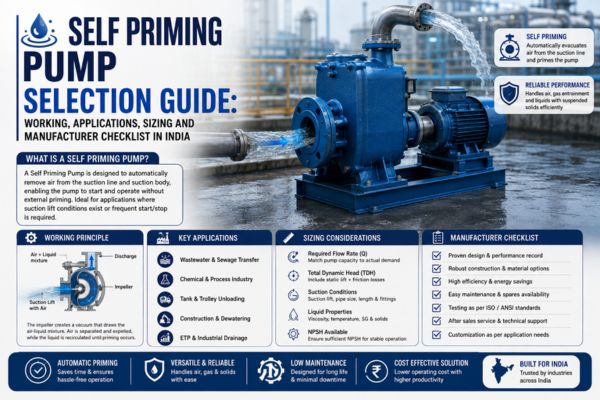
A self priming pump is a highly specialized version of a standard centrifugal pump. It is designed to lift liquids from a source located below the pump installation level without requiring manual water filling or an external vacuum system every time it starts.
The fundamental difference lies in its casing design. While a standard pump has a compact casing fitted tightly around the rotating impeller, a self priming pump features a large oversized outer casing. This spacious casing acts as an internal liquid reservoir. It retains a fixed amount of liquid inside the pump even after the motor shuts down and the suction pipe drains completely empty. When the pump starts again, it uses this retained liquid to create a vacuum, pull the air out of the empty suction pipe and draw the fresh liquid upwards into the pump chamber.
How Does a Self Priming Pump Work?
Understanding the internal mechanism helps buyers appreciate why this equipment is so valuable for difficult suction lift applications. The working cycle of a self priming pump is divided into two distinct phases: the priming phase and the normal pumping phase.
Here is a simple step by step breakdown of the entire process:
Initial Liquid Retention:
Before starting the pump for the very first time, the operator must manually fill the large outer casing with the process liquid. This is a one time requirement. Once filled, the pump is ready to operate indefinitely.
The Mixing Action:
When the electric motor starts, the impeller rotates at high speed. It takes the liquid retained in the casing and mixes it violently with the air trapped inside the empty suction pipeline.
Air Separation:
This mixture of liquid and air is pushed out of the impeller into a wider separation chamber inside the pump casing. Because air is much lighter than liquid, the air bubbles rise to the top of the chamber and vent out through the open discharge pipe.
Recirculation and Vacuum Creation:
The heavier liquid, now free of air bubbles, sinks back down to the bottom of the casing and re enters the impeller eye. As this cycle repeats, it systematically removes all the air from the suction line. This continuous removal of air creates a strong vacuum.
Normal Pumping Phase:
The vacuum pulls the atmospheric pressure down on the liquid in the underground sump, forcing the liquid up the suction pipe. Once the liquid reaches the impeller, the pump finishes its priming phase. It now acts exactly like a normal centrifugal pump, delivering a steady and powerful flow of liquid into the discharge system.
Self Priming Pump Compared With a Standard Centrifugal Pump
Many buyers wonder if they truly need a self priming model or if a standard pump will suffice. This comparison table highlights the major functional differences between the two technologies.
| Feature | Standard Centrifugal Pump | Self Priming Pump |
|---|---|---|
| Foot Valve Requirement | Absolutely requires a foot valve to hold liquid in the pipe. | Does not require a foot valve to operate. |
| Initial Starting Process | Requires manual filling of the entire suction pipe every time. | Only requires filling the pump casing once during initial installation. |
| Air Handling Ability | Cannot handle air. Will stop pumping if air enters the line. | Easily clears air pockets and restores flow automatically. |
| Installation Location | Must be installed below the liquid level or closely monitored. | Installed safely above the liquid level at ground height. |
| Maintenance Access | Difficult to access if installed inside deep pits or underground tanks. | Easy to inspect and maintain since it sits safely on solid ground. |
Main Advantages of a Self Priming Pump
Investing in this specialized equipment brings several operational benefits to industrial plants across India.
Firstly, operators save massive amounts of time because they no longer need to climb down into dirty sumps or manually prime pumps with buckets of water before every shift. Secondly, avoiding foot valves entirely eliminates a major source of maintenance frustration. Foot valves frequently choke on debris, fail to close properly and cause traditional pumps to lose their liquid column.
Additionally, because the pump is mounted high above the liquid source, maintenance teams can easily check mechanical seals, monitor bearing temperatures and perform routine oil changes without confined space entry permits. This ground level access drastically improves worker safety and reduces plant downtime during emergency repairs.
Common Industrial Applications
Because they can reliably pull fluids from deep underground sources and handle occasional air pockets, these pumps serve demanding roles across multiple manufacturing sectors.
Effluent Treatment Plants:
Pumping untreated industrial wastewater, heavy sludge and chemical effluents from deep underground collection sumps into overhead treatment clarifiers.
Chemical Tanker Unloading:
Transferring hazardous liquids from transport road tankers. Because many chemical tankers lack bottom drainage valves for safety reasons, pumps must pull the liquid from the top opening, making a self priming unit essential.
Construction and Trench Dewatering:
Clearing muddy rainwater, groundwater and loose soil from active construction pits and deep building foundations.
Agriculture and Irrigation:
Drawing raw river water, canal water and pond water for large scale farming where water levels fluctuate significantly across different seasons.
Paper and Pulp Manufacturing:
Moving black liquor, paper stock and chemical washes from collection pits located far beneath the main factory floor.
Marine and Shipyards:
Emptying cargo bilges, draining flooded compartments and handling seawater intake where the suction lift changes constantly with the ocean tide.
Important Factors for Pump Selection
Selecting the correct industrial pump prevents premature mechanical failures and wasted electricity. Buyers must carefully evaluate these core operational parameters before contacting a Self Priming Pump Manufacturer.
How to Select the Right Pump Material
The construction material of your pump dictates its lifespan. Selecting the wrong material for a harsh chemical will destroy the pump casing within weeks.
- Cast Iron and Ductile Iron: Excellent for neutral pH fluids like clear water, cooling tower circulation and general agricultural irrigation.
- Stainless Steel 316: The industry standard for food processing, pharmaceutical solvents, mild organic acids and hygienic applications where rust contamination is unacceptable.
- Polypropylene and PVDF: Engineered non metallic plastics used strictly for highly corrosive inorganic acids like hydrochloric acid, sulfuric acid and aggressive electroplating chemicals.
- High Chrome Alloys: Used when the liquid contains abrasive materials like sand, coal dust or mineral slurries that would rapidly wear away standard metals.
Common Self Priming Pump Problems and Their Possible Causes
Even the best equipment occasionally faces operational challenges. Recognizing the symptoms early saves costly repair bills.
- Pump Fails to Prime: The most common issue. This usually happens because there is a massive air leak in the suction pipe, the pump casing lacks its initial liquid charge, or the suction lift distance is simply too great for the pump to overcome.
- Reduced Flow Rate: If the pump operates but delivers very little liquid, the internal impeller may be partially clogged with rags, the suction strainer might be blocked with mud, or the internal wear rings have degraded.
- Excessive Noise and Vibration: Loud popping noises that sound like marbles traveling through the pump indicate cavitation. This occurs when the suction pipe is too narrow or the liquid is too hot, causing the liquid to boil inside the pump chamber.
- Mechanical Seal Leakage: Dripping liquid from the pump shaft usually means the mechanical seal faces are scratched by abrasive dirt, or the pump ran completely dry and melted the seal components.
Maintenance Practices That Improve Pump Life
Implementing a proactive maintenance routine guarantees uninterrupted plant operations.
Always check the bearing housing oil level through the sight glass weekly and change the lubricating oil every few thousand operating hours. Inspect the suction strainer regularly to ensure debris is not starving the pump of liquid. Monitor the mechanical seal area for unusual drips or chemical crystal formation. Finally, verify that the foundation bolts remain tight, as loose bolts cause shaft misalignment, leading to severe vibration and broken couplings.
Manufacturer and Supplier Evaluation Checklist
Finding a trustworthy Self Priming Pump Supplier in India goes beyond simply accepting the lowest price quote. The right partner provides engineering expertise, reliable warranties and continuous aftermarket support.
When evaluating a manufacturer, review their production facility standards. Ensure they use precise dynamic balancing for all rotating impellers, which prevents vibration. Ask if they perform comprehensive hydrostatic pressure testing on every casing before dispatch. A reputable manufacturer will also have a dedicated testing bay to verify flow and head parameters against actual motor performance before shipping the final product to your factory.
Questions Buyers Should Ask Before Requesting a Quotation
- Do you manufacture the pumps in house or simply assemble imported components?
- Can you provide the performance curve graph for this specific model at our requested duty point?
- What is the standard wait time for replacement parts like mechanical seals and impellers?
- Do you offer on site commissioning assistance for large industrial installations?
- Are your pumps designed with a back pull out feature for easier maintenance?
Information Buyers Should Provide to the Manufacturer
To get an accurate and technically sound quotation, use this buyer checklist table to share your process details clearly.
| Parameter Category | Details to Provide the Supplier |
|---|---|
| Liquid Characteristics | Name of the fluid, chemical concentration, specific gravity and maximum viscosity. |
| Capacity Requirements | Desired normal flow rate and absolute maximum flow rate needed. |
| Pressure and Head | Total discharge head required to reach the final destination tank. |
| Suction Conditions | Exact vertical depth of the underground sump and total length of the suction pipe. |
| Temperature Range | Minimum winter temperature and maximum summer operating temperature of the liquid. |
| Solids Present | Maximum diameter of solid particles and percentage of solids in the liquid. |
| Preferred Materials | Any specific plant standards regarding stainless steel grades or mechanical seal types. |
Why Technical Support, Spare Parts and Correct Sizing Matter
An industrial pump is a long term investment. The initial purchase price is only a tiny fraction of its total lifecycle cost. Using an incorrectly sized pump leads to massive electricity waste and frequent breakdowns.
Working directly with an established manufacturer ensures your equipment is customized precisely for your fluid density, pipe friction and required flow rate. Furthermore, when wear parts eventually degrade, having direct access to identical factory spare parts prevents you from relying on low quality local fabrications that compromise pump efficiency.
Conclusion
Overcoming difficult suction conditions requires rugged, correctly engineered fluid handling equipment. A self priming pump eliminates the dangers of dry running, removes the frustration of foot valves and provides a safe, accessible pumping solution for wastewater, chemicals and general utility applications. By carefully calculating your suction lift, flow rate and material compatibility, you can secure equipment that delivers years of flawless service.
For dependable industrial solutions, partner with experts who understand your unique processing challenges. As a leading Self Priming Pump Manufacturer in India, Rinku Engineers designs and builds heavy duty pumping systems tailored for aggressive industrial environments.
Explore our complete Self Priming Pump range to discover robust designs built for maximum reliability. For highly corrosive applications, review our chemical pump options, or browse our standard centrifugal pump catalogue for general utility transfers.
Ready to optimize your fluid handling process? Visit our contact page today to connect with our application engineers for personalized sizing support and customized technical quotations.
Frequently Asked Questions (FAQs)
No. You only need to fill the main pump casing with liquid during the very first installation. The specialized casing retains enough liquid to re prime itself automatically during all future motor starts.
While theoretical physics allows for nearly ten meters, practical industrial applications should limit the vertical suction lift to roughly six or seven meters. Going deeper risks severe cavitation and extremely slow priming times.
Yes, provided they are fitted with the correct impeller type. Pumps equipped with semi open or vortex impellers easily handle muddy water, sludge and suspended solids without choking.
Slow priming is typically caused by a loose connection allowing outside air into the suction pipe, an oversized suction pipe diameter that holds too much air, or a partially blocked internal recirculation port inside the pump casing.
Absolutely, as long as the pump is manufactured using highly corrosion resistant materials like PVDF, Polypropylene or specialized high nickel alloys, and equipped with premium chemical grade mechanical seals.
No. While it can handle pulling air during the brief priming phase, the pump must always have its initial liquid charge inside the casing to lubricate and cool the mechanical seals. Running it completely bone dry will melt the seals very quickly.